
The claim that OpenAI’s $6.5 billion acquisition signals Apple’s biggest AI crisis stems from OpenAI’s purchase of io, an AI hardware startup co-founded by former Apple design chief Jony Ive, announced on May 21, 2025. This deal, valued at $6.4–$6.5 billion, is OpenAI’s largest acquisition and marks its entry into consumer hardware, potentially challenging Apple’s dominance in design-driven tech. Below is a detailed analysis based on available information, including web sources and posts on X.
Background on the Acquisition
- Details of the Deal: OpenAI acquired io, a startup founded in 2024 by Jony Ive, alongside former Apple designers Scott Cannon, Evans Hankey, and Tang Tan. The all-stock deal, valued at approximately $6.5 billion, includes OpenAI paying $5 billion in equity, with the remaining value from a prior 23% stake acquired in 2024. Io’s 55-person team of engineers, designers, and researchers will merge with OpenAI to form its devices division, led by Peter Welinder, reporting to CEO Sam Altman. Jony Ive’s design firm, LoveFrom, will remain independent but take on creative and design responsibilities across OpenAI, including software and hardware.
- Purpose: The acquisition aims to develop a “new family of AI-powered devices” for the era of artificial general intelligence (AGI), with the first products expected in 2026. These devices are rumored to be “screenless” AI companions, moving beyond traditional smartphones and laptops, potentially redefining user interaction with technology.
- Key Players: Jony Ive, known for designing iconic Apple products like the iPhone, iPad, and Apple Watch, brings unparalleled expertise. Sam Altman has described Ive as “the greatest designer in the world,” emphasizing the ambition to create groundbreaking AI hardware.
Why This Signals a Crisis for Apple
- Loss of Design Talent:
- Jony Ive, Apple’s former chief design officer (1992–2019), was instrumental in shaping its aesthetic and functional legacy, from the iMac to the iPhone. His departure in 2019 and now his collaboration with OpenAI, alongside other Apple alumni (Hankey, Tan, Cannon), represents a significant loss of design expertise. These individuals were behind Apple’s most iconic products, and their move to a rival signals a brain drain.
- Posts on X highlight the sentiment: “Jony Ive back in the hardware game? ?→AI pivot is real,” suggesting OpenAI’s move could outmaneuver Apple in design innovation.
- Apple’s AI Struggles:
- Apple has been criticized for lagging in generative AI compared to competitors like OpenAI, Google, and Anthropic. Its Apple Intelligence suite, announced in 2024, integrates ChatGPT for queries Siri can’t handle, indicating reliance on external AI models rather than in-house innovation.
- Apple’s AI features are seen as incremental, with Siri functioning as a question-and-answer system rather than a conversational AI like ChatGPT or Google’s Gemini. This gap is underscored by analyst Gene Munster’s X post: “Apple is not seeing a path where it makes sense to build a competitive, full feature LLM.”
- Apple’s stock fell 2–2.3% (wiping out nearly $70 billion in market value) after the acquisition news, reflecting investor concerns about its AI competitiveness.
- Hardware Disruption Threat:
- OpenAI’s goal to create “AI-first” devices that move “beyond screens” directly challenges Apple’s iPhone-centric ecosystem. Ive’s criticism of existing AI hardware (e.g., Humane’s AI Pin, Rabbit R1) as “very poor” suggests a bold vision for novel form factors, potentially making the iPhone feel outdated.
- Fox News reported that the deal “sparks fears that Apple may lose its tech leadership to AI rivals,” as OpenAI and Ive aim to redefine personal technology.
- X posts amplify this: “It’s not that [Apple] gets overtaken. It’s that it gets out-contextualized,” warning that Apple’s iterative approach risks irrelevance.
- Strategic Missteps:
- Apple withdrew from a $6.5 billion OpenAI funding round in September 2024, a decision that may have cost it influence over OpenAI’s direction. While Apple still integrates ChatGPT into Siri, it missed a chance to align with Ive’s hardware ambitions.
- An X post by @edzitron noted Apple’s deal with OpenAI was “weak,” costing OpenAI money while Apple takes a cut of ChatGPT Plus subscriptions, suggesting a lack of strategic foresight.
Counterarguments: Is This Really Apple’s Biggest Crisis?
- Apple’s Strengths:
- Apple’s $53.2 billion endowment (as noted in prior responses) and ecosystem of over 2 billion active devices provide resilience. Its integrated hardware-software model remains a high barrier to entry, even for OpenAI.
- Apple is reportedly working on AI-powered smart glasses and other hardware, which could compete with OpenAI’s devices.
- Early Stage of OpenAI’s Hardware:
- OpenAI’s devices are untested, with no products launched and a debut not expected until 2026. Previous AI hardware attempts (e.g., Humane’s AI Pin) have failed, suggesting risks for OpenAI.
- Ive’s io has not yet produced hardware, and the $6.5 billion valuation may reflect hype rather than proven value, as noted in skeptical X posts: “Altman is a con man and Ive a fraud who steals from others.”
- Market Dynamics:
- Apple dominates the smartphone market alongside Samsung, with hundreds of millions of devices sold annually. Disrupting this requires more than innovative design; it demands scale and ecosystem integration, areas where Apple excels.
Broader Context and Implications
- Industry Shift: The acquisition reflects a broader tech shift toward AI-driven hardware, with competitors like Meta (Ray-Ban Meta glasses) and Google (AR partnerships) also exploring new form factors. OpenAI’s move, backed by its $300 billion valuation and investors like Microsoft and SoftBank, positions it as a formidable player.
- Trump’s Influence: The Trump administration’s policies, including tariffs and AI investment priorities (e.g., the Stargate project with SoftBank and Oracle), may indirectly bolster OpenAI’s ambitions, adding pressure on Apple.
- Sentiment on X: Posts reflect mixed views. Some see OpenAI’s move as a game-changer (“OpenAI devices are coming—interesting implications for Apple”), while others question its viability or criticize Apple’s complacency.
Conclusion
OpenAI’s $6.5 billion acquisition of io, led by Jony Ive, poses a significant challenge to Apple by combining cutting-edge AI with world-class design expertise, targeting innovative, screenless devices that could disrupt Apple’s iPhone dominance. Apple’s lag in generative AI, reliance on OpenAI for Siri, and the loss of Ive’s team amplify perceptions of a crisis, as evidenced by a $70 billion market value drop. However, Apple’s ecosystem, financial strength, and ongoing AI efforts suggest it’s not out of the race. The true impact depends on OpenAI’s ability to deliver in 2026 and Apple’s response at events like WWDC on June 9, 2025. This is a pivotal moment, but calling it Apple’s “biggest crisis” may overstate the immediate threat given the unproven nature of OpenAI’s hardware.
For xAI product details, visit https://x.ai/grok.
Openai has just made a move that’S turning heads across the tech world. The company is Acquiring IO, The AI Device Startup Founded by Jony Ive, for Nearly $ 6.5 Billion. This isn’t your typical business deal. It’s a collaboration Between Sam Altman, Who Leads Openai, and the Designer Responsible for some of Apple’s most iconic products, include the iPhone and Apple Watch. Togeether, they want to create a new generation of ai-powered devices that could complete complete change how we use technology.
Openai’s chatgpt on a smartphone (Kurt “Cyberguy” Knutsson)
Why this deal matters
This deal is significant for a few reasons. Jony IVE is Stepping into a Major Creative and Design Role at Openai, Bringing along his team of engines and designers, many of who also have apple roots. Their mission is to build hardware that goes beyond the family territory of smartphones and laptops. The first product from this team is expected in 2026, and while details are still scarce, it’s rumored to be a “screenless” Ai Companion. The Idea is to develop somebing that’s aware of its surroundings and designed to help users in ways that current devices simply can’t.
5 ai terms you keep hearing and what they actually mean
Apple faces a new kind of competition
Apple, which has long been seen as the Leader in Design and Innovation, Suddenly Finds Itself in a Tough Spot. The company has struggled to keep up with the Rapid Advancements in AiAnd now openai is moving directly into its territory. Investors are cleverly worried, as apple’s stock dropped after the news broke. Unlike Previous competitors such as google, which tried to Beat Apple at Its Own GameOpenai and Ive are Taking a different approach. They’re aiming to create a device that could make the iPhone feel outdated by focusing on ai-first experiences and moving away from trading.
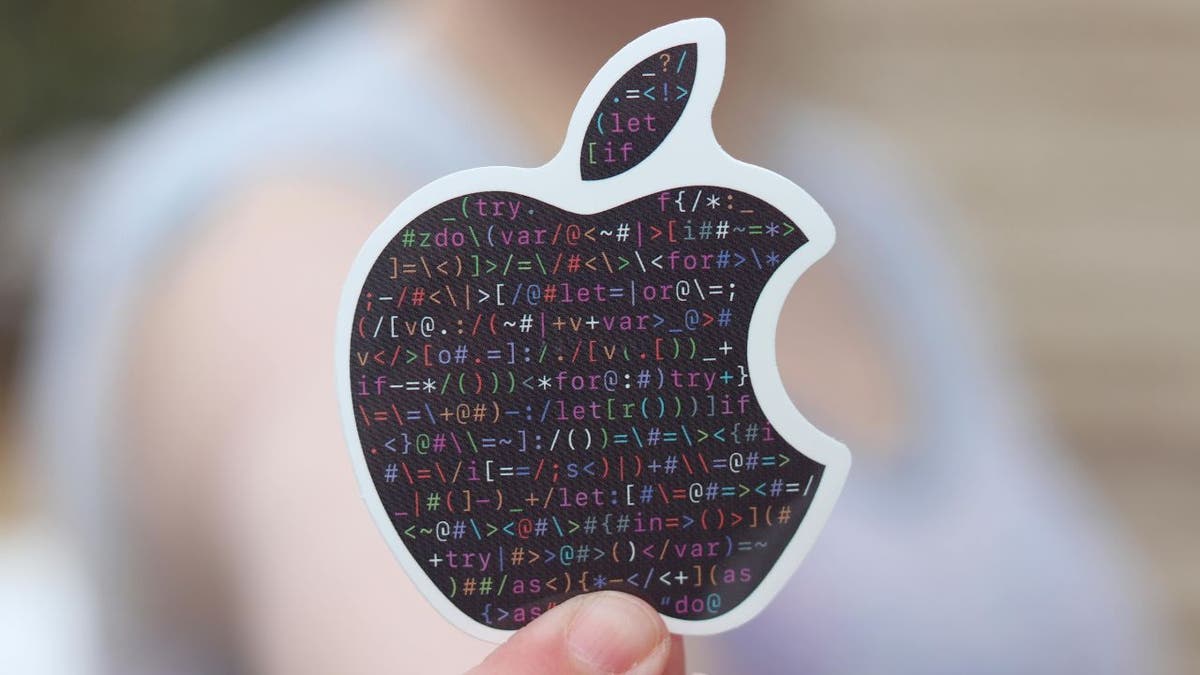
Apple logo (Kurt “Cyberguy” Knutsson)
7 new google ai tools from i/o 2025 you should know about
What will the new device be like?
So what will this new device actually look like? While Altman and Ive are keeping most details secret, they have hinted at a family of ai devices that focus on seamless, intuitive interaction rather than screen screen. They want to create something that undresses your context, adapts to your needs and helps you connect and create in new ways, all without required you to stare at a display. The device won’t be a phone or a pair of glasses but somewithing entryly new that fits into your life as naturally as a macbook or iPhone on Openai’s Ambition is huge. In Fact, they want to ship 100 million units faster than any company have done with a new product, which shows just how big
Ai to Monitor Nyc Subway Safety as Crime Concerns Rise
What’s Next for Openai and Apple?
For Openai, this is the largest acquisition it has ever made and marks a serial push into consumer hardware. With Jony Ive Leading Design, Openai is bettering that it can outpace apple and define the next era of personal technology. Meanwhile, apple is under more pressure than ever to delivery on its own Ai Ai Promies and to Innovate Beyond The Incremental Updates Weian in Recent Years. The competition is no longer just about who makes the best phone. Now, it’s about who can redefine the relationship between people and technology in the age of ai.
Subscribe to kurt’s youtube channel for quick video tips on how to work all of your tech devices
Artificial Intelligence (Kurt “Cyberguy” Knutsson)
Kurt’s key takeaways
It’s impressive to see two visionaries like Sam Altman and Jony IVE Working Togetra on Something this amable If their ai devices live up to expectations, we could be on the verge of a major shift in how we use and think about technology. Apple finally has a real challenger, and the next few years are sure to be interesting for anyone following the future of tech.
Do you believe apple can regain its edge innovation, or is the future of personal tech now in the hands of new players like Openai? Let us know by written us at Cyberguy.com/Contact.
For more of my tech tips and security alerts, subscribe to my free cyberguy report newsletter by heading to Cyberguy.com/newsletter,
Ask kurt a question or let us know what stories you’d like us to cover,
Follow kurt on his social channels:
Answers to the most-also cyberguy questions:
New from kurt:
Copyright 2025 cyberguy.com. All rights reserved.
https://www.foxnews.com/tech/openais-6-5b-new-acquisition-signals-apples-biggest-ai-crisis-yet