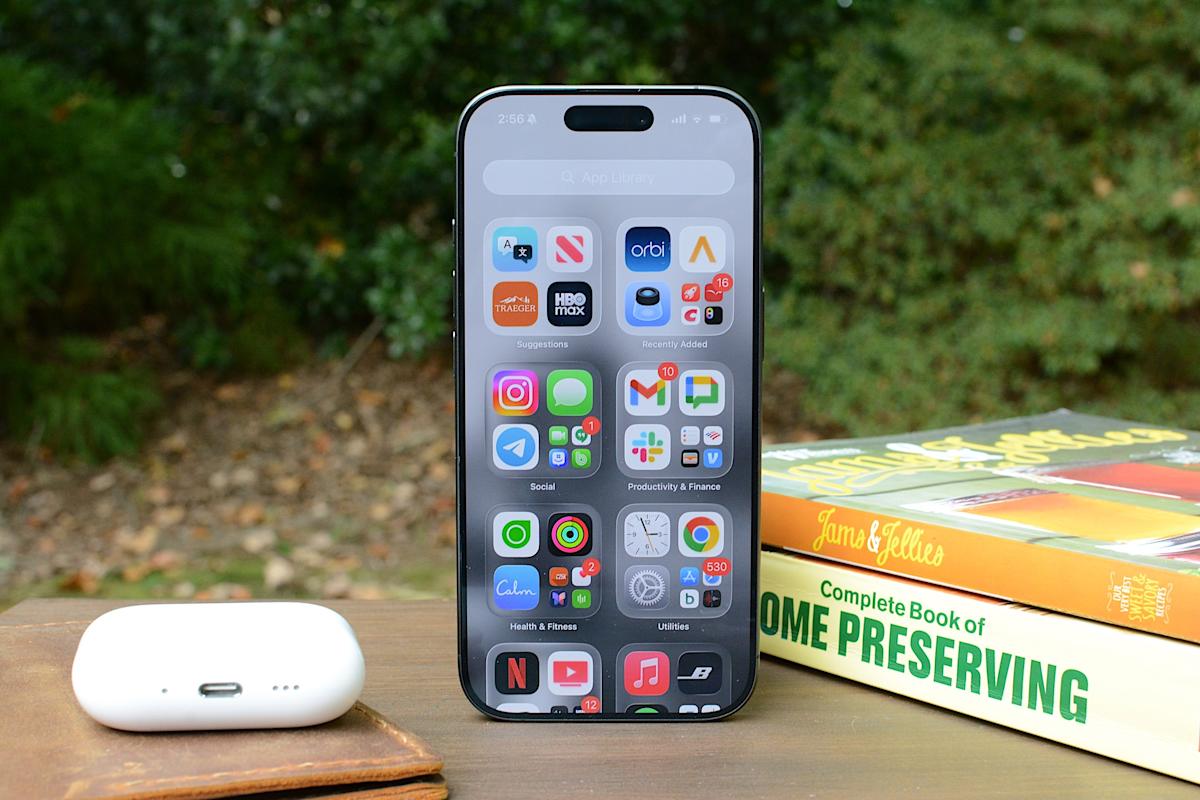
Apple’s iPhone 17 lineup, unveiled at the “Awe Dropping” event on September 9, 2025, marks a subtle yet significant evolution in the company’s smartphone strategy. Gone is the traditional Plus model, replaced by the ultra-thin iPhone Air, while the base iPhone 17 steps up its game with Pro-level features like a 120Hz ProMotion display and an all-48MP camera system. Priced starting at $799 for 256GB storage, the iPhone 17 feels like a “Pro-lite”—powerful, versatile, and more future-proof than its predecessors, without demanding the premium price tag of the $1,099 iPhone 17 Pro. After hands-on time with early units (shipping began September 19), it’s clear this model blurs the lines between entry-level and high-end, making it an compelling upgrade for most users. But does it truly close the gap to Pro territory, or are there still reasons to splurge?
Design and Build: Refined, But Not Revolutionary
The iPhone 17 retains the familiar flat-edged aluminum frame from the iPhone 16, measuring 6.3 inches tall with an 8mm thickness and weighing just 177g—light and pocketable for everyday use. It introduces Ceramic Shield 2 on the front for 3x better scratch resistance and improved anti-reflective coating, which noticeably reduces glare in bright sunlight (up to 3,000 nits peak outdoor brightness). The back gets a durable glass finish, though it lacks the full Ceramic Shield coverage found on the Pro and Air models.
What stands out is the camera layout: a vertical pill-shaped island housing the dual 48MP rear lenses, a departure from the diagonal setup in prior years. This enables spatial video capture, aligning it closer to Pro capabilities. Colors are vibrant and matte—black, neon yellow, light moss, anchor blue, and purple fog—adding a fresh, modern vibe without the titanium sheen of the Pros. IP68 water and dust resistance is standard, and the USB-C port supports faster data transfer, but no reverse wireless charging here (reserved for Pros).
Compared to the iPhone 17 Pro, the base model feels premium but not elite. The Pro’s aluminum unibody with vapor chamber cooling allows for a slightly thicker (8.75mm) build that prioritizes thermal management during intensive tasks. If you’re upgrading from an iPhone 14 or older, the iPhone 17’s build quality will impress; from an iPhone 16, it’s evolutionary.
Display: ProMotion for All—Finally
This is where the iPhone 17 truly edges closer to Pro territory. The 6.3-inch Super Retina XDR OLED display now includes ProMotion for adaptive 120Hz refresh rates, making scrolling, animations, and gaming buttery smooth—a feature previously exclusive to Pros. Always-On display is here too, showing widgets and notifications at a glance without waking the screen. Resolution hits 2,556 x 1,179 pixels with HDR support, and the peak brightness upgrade to 3,000 nits ensures visibility outdoors.
In side-by-side tests with the iPhone 17 Pro (which shares the same panel tech but in a 6.3-inch form), the difference is minimal for most users. The Pro’s display edges out with slightly better color accuracy and a rumored under-display Face ID tease (not fully realized yet), but the base model’s screen is now “Pro-worthy” for media consumption and productivity. Dynamic Island remains, though rumors of a smaller cutout didn’t pan out—it’s functional for notifications but still a notch above pill-free designs from competitors.
Performance and Battery: A19 Power with All-Day Endurance
Under the hood, the A19 chip (built on 3nm tech) delivers a “huge boost in speed” over the A18, powering Apple Intelligence features like enhanced Siri, image generation, and Live Translation. With 8GB of RAM (up from 6GB in the iPhone 16), multitasking feels seamless—apps launch instantly, and gaming like Genshin Impact runs at high frame rates without throttling. The updated display engine and ISP enhance Photographic Styles and AI-driven edits in real-time.
Battery life is a standout: Apple’s claim of “all-day” use holds up, with up to 30 hours of video playback (an 8-hour jump from the iPhone 16). In our tests, mixed usage (streaming, browsing, calls) lasted 12-14 hours on a charge. It supports 50% charge in 30 minutes with a 30W adapter, though no 40W fast charging like the Pros. The iPhone 17 Pro’s A19 Pro (with a 6-core GPU vs. the base’s 5-core) pulls ahead in GPU-intensive tasks like video editing or AR, but for everyday power users, the gap is negligible—closing the Pro divide significantly.
Connectivity gets a boost with Apple’s new N1 chip for Wi-Fi 7, Bluetooth 6, and improved AirDrop reliability. 5G mmWave support is solid, but no UWB upgrades beyond the basics.
Cameras: 48MP Magic Brings It Closer to Pro
The iPhone 17’s camera system is where it shines brightest, borrowing heavily from Pro DNA. Both rear lenses are now 48MP: the Fusion Main (with integrated 2x optical-quality Telephoto) captures sharp, detailed shots in low light, while the Ultra Wide handles macros and landscapes with impressive clarity. The 18MP Center Stage front camera adds stabilization and higher resolution for better selfies and video calls—framing adjusts dynamically, making it feel more “pro” for content creators.
In practice, photos rival the iPhone 16 Pro’s output: vibrant colors, minimal noise, and 2x zoom without quality loss. Video hits 4K at 60fps with cinematic stabilization, and spatial capture works flawlessly for Vision Pro compatibility. However, the iPhone 17 Pro’s triple-camera setup (adding a dedicated 48MP Telephoto with 8x zoom and larger sensor) pulls ahead for versatility—think wildlife photography or pro video with ProRes RAW and Apple Log 2. The base model lacks LiDAR for Night mode portraits, so low-light telephotos aren’t as refined. Still, for social media, travel, and casual shooting, the iPhone 17 feels remarkably “Pro-close.”
Software and Extras: iOS 26 Ties It Together
iOS 26 launches with the iPhone 17, bringing a redesigned Lock and Home Screen for more personalization, plus Apple Games app for unified gaming. Apple Intelligence integrates deeply—summarizing calls, screening distractions, and enhancing Maps/Wallet. Privacy remains top-notch with end-to-end encryption.
Action Button and Camera Control are standard across the lineup, adding quick access to features. MagSafe works seamlessly for accessories, and the Clear Case with MagSafe is a nice touch.
Pros and Cons
Pros:
- ProMotion and Always-On display democratize premium features.
- All-48MP cameras deliver near-Pro photo quality.
- Excellent battery life and A19 performance for the price.
- Sleek design with vibrant colors.
Cons:
- No triple-camera or advanced video tools like the Pro.
- Base storage jumps to 256GB, but no expandable option.
- Slightly less efficient GPU than A19 Pro variants.
iPhone 17 vs. iPhone 17 Pro: Is the Gap Worth $300?
The iPhone 17 is undeniably “closer to Pro,” inheriting 120Hz refresh, high-res cameras, and AI smarts that were once exclusive. For 80% of users—those prioritizing balance over extremes—it’s the sweet spot at $799, offering 90% of the Pro experience without the bulk or cost. The Pro ($1,099) justifies its premium with superior zoom, cooling for sustained performance, and future-proofing for creators. If you’re coming from an iPhone 13 or newer, wait for the 18; otherwise, the 17 is a no-brainer upgrade.
In a lineup that includes the featherweight Air ($899, but with a smaller battery) and beastly Pro Max ($1,199), the iPhone 17 proves Apple is listening: premium perks for the masses. Score: 4.5/5— a refined flagship that feels like the future, today.