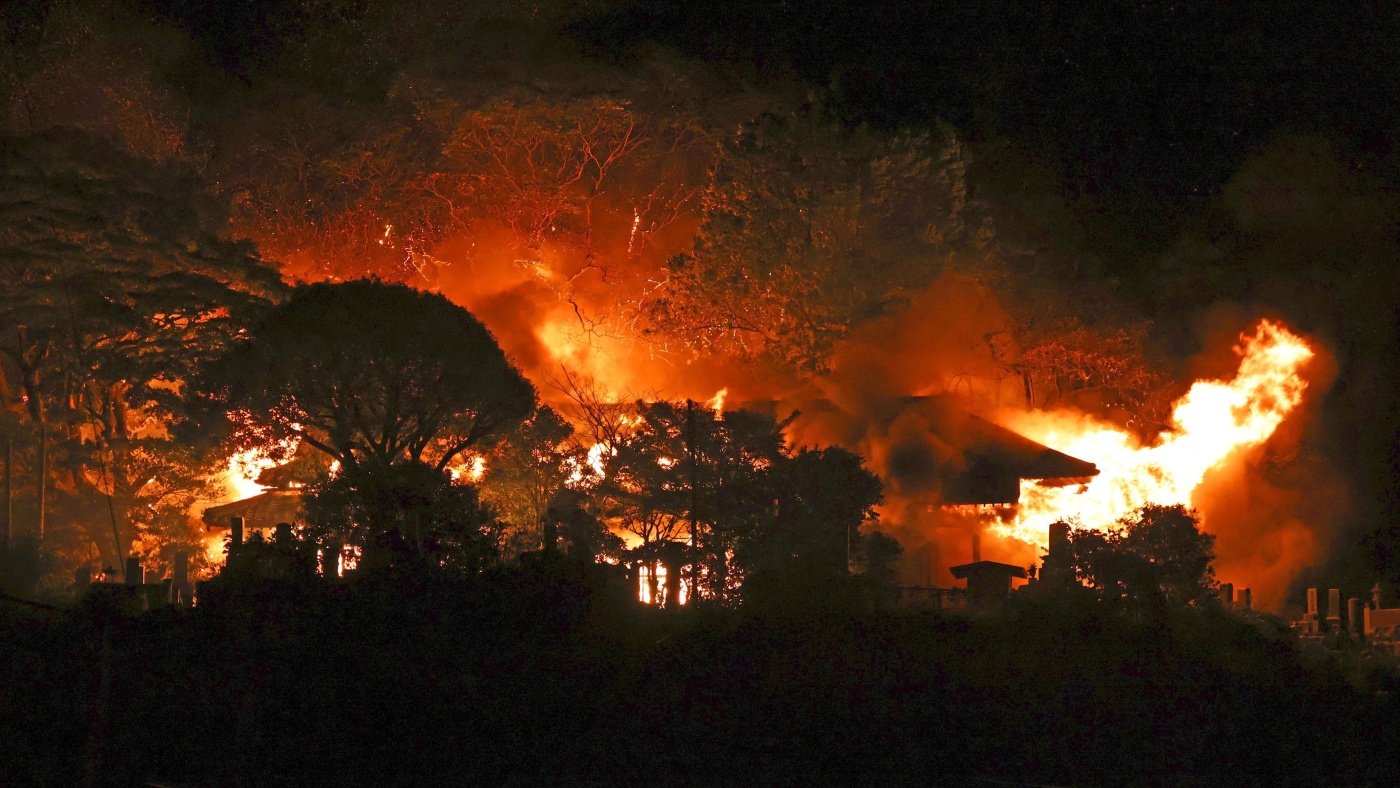
Massive Fire in Southwest Japan Devastates 170 Homes, Claims One Life Amid Evacuations
By Hiroshi Tanaka, Asia Correspondent
November 20, 2025
A ferocious blaze tore through a densely packed residential neighborhood in Oita, a coastal city on Japan’s Kyushu island, on Tuesday evening, razing over 170 homes and forcing more than 170 residents to flee in the dead of night. The fire, fueled by strong winds and old wooden structures, claimed at least one life and injured another, marking it as the largest urban conflagration in the country since 1976. As firefighters and military helicopters continued mopping up operations Wednesday, authorities urged evacuees to remain in shelters amid the cold autumn chill.
Blaze Erupts Near Fishing Port, Spreads Rapidly Through Narrow Alleys
The inferno ignited around 8 p.m. local time on November 18 in the Saganoseki district of Oita, a hilly area overlooking a bustling fishing port renowned for its Seki mackerel. Initial reports suggest the fire started in a forested area adjacent to the residential zone, possibly sparked by dry underbrush or an unattended source, though investigators have yet to pinpoint the exact cause.
Gusts exceeding 20 km/h whipped the flames through a labyrinth of narrow alleyways lined with traditional wooden houses, many dating back decades and packed closely together—a common sight in Japan’s older urban pockets. By dawn on November 19, the fire had engulfed 48,900 square meters—equivalent to seven soccer fields—destroying or severely damaging 171 structures, according to Japan’s Fire and Disaster Management Agency. Aerial footage captured by Kyodo News showed entire rows of homes reduced to charred skeletons, with thick plumes of smoke blanketing the hillside community about 25 kilometers east of central Oita.
Local media, including NHK, broadcast harrowing videos of residents scrambling from their homes as embers rained down, illuminating the night sky in an orange glow. “It spread so fast; we barely had time to grab our pets and documents,” one evacuee told reporters from a nearby elementary school turned shelter.
Oita Prefecture, home to roughly 1.1 million people, lies about 770 kilometers southwest of Tokyo on Kyushu, Japan’s southernmost main island. The region’s mild climate and proximity to the sea make it a hub for fisheries, but also vulnerable to seasonal winds that can accelerate wildfires.
Emergency Response: Helicopters and Ground Crews Battle Through the Night
Over 200 firefighters from Oita and neighboring prefectures rushed to the scene, battling the blaze with water cannons and foam amid challenging terrain. As the fire leaped from house to house, the Oita governor requested military support, prompting the deployment of two Japan Ground Self-Defense Force (JGSDF) helicopters equipped with water-dropping buckets.
The choppers made repeated sorties from early Wednesday, dumping thousands of liters on hotspots until the flames were fully contained by mid-morning. Ground teams, hampered by the area’s steep slopes and tight access roads, used drones for reconnaissance and thermal imaging to root out lingering embers. No major flare-ups were reported by Wednesday afternoon, but officials warned of re-ignition risks due to smoldering debris.
Prime Minister Sanae Takaichi, addressing the crisis from Tokyo, expressed solidarity on X (formerly Twitter): “I extend my heartfelt condolences to all residents who are evacuating in the cold.” She confirmed central government aid, including temporary housing subsidies and psychological support for displaced families.
Human Toll: One Confirmed Death, Injuries, and Hundreds Displaced
The fire’s ferocity exacted a grim price. One unidentified individual was found dead amid the rubble, according to police sources cited by local outlets. A woman in her 50s suffered mild burns while fleeing and was hospitalized in stable condition. Searches continued Wednesday for any additional missing persons, with at least two elderly residents initially unaccounted for but later located in shelters.
Evacuation orders affected 175 people from the Akinoe and Saganoseki areas, many of them seniors and families with young children. Emergency shelters at local schools and community centers provided blankets, hot meals, and medical checkups, but officials noted the strain of accommodating pet-owning households—over 40 animals were rescued, including dogs and cats.
Community leaders reported no immediate shortages, but long-term displacement could last weeks as damage assessments wrap up. The Red Cross and local NGOs mobilized volunteers to distribute essentials like winter clothing, given Oita’s dipping temperatures.
- Key Facts on the Oita Fire:
- Date and Time: Started November 18, 2025, around 8 p.m.; contained by November 19 morning.
- Location: Saganoseki district, Oita City, Oita Prefecture, Kyushu Island.
- Structures Affected: 171 homes/buildings damaged or destroyed.
- Area Burned: 48,900 square meters (about 7 soccer fields).
- Casualties: 1 dead, 1 injured (mild burns).
- Evacuees: 175 residents; all accounted for as of Wednesday evening.
- Response Assets: 200+ firefighters, 2 military helicopters.
Historical Echoes: Japan’s Worst Urban Blaze in Decades
This disaster evokes painful memories of Japan’s vulnerability to fast-spreading fires in its aging urban fabric. It surpasses the 2016 Itoigawa blaze in Niigata Prefecture, which razed 147 buildings over 40,000 square meters without fatalities, as the largest non-earthquake-related urban fire since 1976’s Sakata inferno. That earlier event, also wind-driven, destroyed over 200 structures in Yamagata Prefecture.
Experts attribute such incidents to Japan’s wooden architecture—up to 40% of urban homes nationwide are pre-1981 builds lacking modern fireproofing, per a 2024 National Institute for Land and Infrastructure Management report. Climate factors, including drier autumns linked to El Niño patterns, have raised wildfire risks by 15% in southern regions since 2020, according to the Japan Meteorological Agency.
In Saganoseki, a tight-knit fishing enclave of about 5,000, the loss compounds economic pressures from declining fish stocks. Local officials estimate rebuilding costs at ¥5-7 billion ($32-45 million), with insurance covering only a fraction for many low-income households.
Road to Recovery: Aid Pledges and Lessons Learned
As cleanup crews sifted through ashes Thursday, focus shifted to rebuilding. Oita Prefecture allocated ¥1 billion ($6.4 million) from disaster reserves for immediate relief, including modular housing units expected within 72 hours. The central government promised low-interest loans and tax breaks, drawing from protocols refined after the 2019 Kyoto arson fire that killed 36.
Fire safety advocates renewed calls for nationwide retrofits, estimating a ¥10 trillion investment to modernize wooden housing stock. “Events like this underscore the urgency,” said Dr. Yuko Nakamura, a urban planning expert at Kyushu University. Community drills, already mandatory in Oita schools, will expand to include elderly-focused simulations.
On social media, #OitaFire trended with over 50,000 posts, blending survivor stories and donation drives. International offers poured in from neighbors like South Korea’s fire service, which dispatched expertise via bilateral agreements.
- Recovery Updates:
- Temporary shelters operational; capacity for 300.
- Damage assessment: 80% of affected homes fully destroyed.
- Economic Hit: ¥500 million initial loss to local fisheries and tourism.
- Fire Cause Probe: Expected conclusion by November 25; arson not suspected.
The Oita fire serves as a sobering reminder of nature’s fury in Japan’s fire-prone landscapes, where progress meets tradition. With one life lost and a community scarred, the path forward demands resilience, innovation, and solidarity. As residents return to sift through remnants, their resolve—and national support—will define the rebuild, ensuring Saganoseki rises stronger from the ashes.