
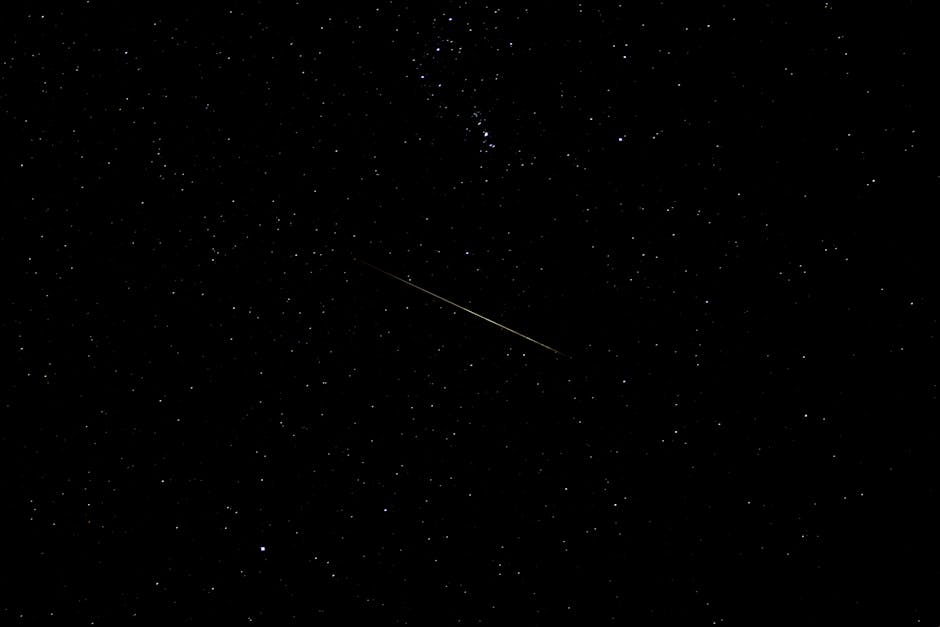
Comet 3I/ATLAS, a celestial customer from past our photo voltaic system, is ready to make its closest method to Earth on Friday evening, providing a singular alternative for astronomers and the general public to look at an interstellar object. This uncommon flyby offers a vital window into the composition and traits of matter originating from one other star system, making it a focus for scientific inquiry and public fascination.
Background: A Journey from Interstellar Area
The journey of Comet 3I/ATLAS started lengthy earlier than its discovery, traversing the huge vacancy between star methods earlier than coming into the gravitational affect of our Solar. Its identification as an interstellar object has profound implications, distinguishing it from the numerous comets that originate inside our personal photo voltaic system’s Oort Cloud or Kuiper Belt. Understanding its origins, its classification, and the broader context of cometary science is important to appreciating this extraordinary occasion.
Discovery of Comet 3I/ATLAS
Comet 3I/ATLAS was first detected by the Asteroid Terrestrial-impact Final Alert System (ATLAS) survey on December 29, 2019. The ATLAS system, a community of robotic telescopes designed primarily for planetary protection, routinely scans the evening sky for shifting objects. Working from observatories in Hawaii (Haleakala and Mauna Loa), South Africa (Sutherland), and Chile (El Sauce), ATLAS has confirmed exceptionally adept at discovering not solely probably hazardous asteroids but additionally new comets and different transient celestial phenomena. The preliminary detection revealed a faint, cometary object exhibiting a coma, the fuzzy envelope of gasoline and dirt surrounding a comet’s nucleus.
Subsequent observations by astronomers worldwide confirmed its cometary nature and, critically, its extremely uncommon hyperbolic trajectory. In contrast to comets sure to the Solar in elliptical orbits, a hyperbolic path signifies that an object isn’t gravitationally tied to our photo voltaic system and is merely passing by way of. This distinct orbital signature, mixed with its velocity relative to the Solar, unequivocally established 3I/ATLAS as an interstellar customer, the third such object ever confirmed, therefore its “3I” designation. The earlier two interstellar objects had been 1I/’Oumuamua (found in 2017) and 2I/Borisov (found in 2019), making 3I/ATLAS a big addition to this unique membership. The affirmation of its interstellar origin sparked fast pleasure inside the scientific group, keen to review a pristine pattern of fabric from one other star system.
Comet Classification and Nomenclature
Comets are celestial our bodies composed primarily of ice, mud, and rocky materials, typically described as “soiled snowballs.” As they method the Solar, photo voltaic radiation causes their unstable ices to sublimate, forming a glowing coma and sometimes a spectacular tail that may stretch for tens of millions of kilometers. Comets are broadly categorised primarily based on their orbital intervals: short-period comets (interval lower than 200 years, typically from the Kuiper Belt) and long-period comets (interval better than 200 years, sometimes from the Oort Cloud).
The nomenclature system for comets is standardized by the Worldwide Astronomical Union (IAU). A comet’s designation sometimes features a prefix indicating its kind (e.g., “C/” for non-periodic, “P/” for periodic, “D/” for disintegrated, “X/” for unsure orbit, and “I/” for interstellar) adopted by the yr of discovery and an alphanumeric code. For 3I/ATLAS, the “3I” signifies it because the third recognized interstellar object. The “ATLAS” a part of its identify credit the survey that found it. This systematic naming ensures readability and offers fast details about the item’s nature. Interstellar objects, by definition, signify a definite class, providing the unprecedented alternative to review materials that fashioned in a completely totally different stellar surroundings.
Orbital Mechanics of Comets and Interstellar Guests
The orbital mechanics of comets are ruled by the legal guidelines of gravity, primarily the Solar’s affect. Most comets comply with elliptical paths, starting from extremely elongated ellipses that take them far into the outer photo voltaic system to extra modest orbits. The eccentricity of an orbit determines its form, with a price of 0 representing an ideal circle and a price near 1 representing a extremely elongated ellipse. An eccentricity better than 1 signifies a hyperbolic orbit, which means the item possesses sufficient velocity to flee the gravitational pull of the central physique solely.
For 3I/ATLAS, its measured orbital eccentricity considerably exceeded 1, confirming its hyperbolic trajectory. This suggests that the comet entered our photo voltaic system from interstellar area, made a single cross across the Solar, and can then depart, by no means to return. Its velocity, relative to the Solar, additionally indicated an origin exterior the photo voltaic system’s gravitational effectively. Whereas typical photo voltaic system comets originate from the Oort Cloud or Kuiper Belt, areas gravitationally sure to the Solar, interstellar objects are ejected from different star methods, maybe throughout planetary formation occasions or shut encounters with different stars. Learning the trajectory of 3I/ATLAS permits astronomers to hint its path by way of our photo voltaic system, predict its closest approaches to Earth and the Solar, and estimate its final departure vector again into interstellar area. This offers invaluable knowledge on the dynamics of objects touring between stars.
Earlier Notable Comets and Their Legacy
All through historical past, vivid comets have captivated humanity, typically considered as harbingers of change or celestial spectacles. Some have left indelible marks on each scientific understanding and widespread tradition. Comet Halley, a short-period comet, is maybe probably the most well-known, with recorded observations relationship again millennia. Its predictable returns each 75-76 years have allowed astronomers to review its evolution over centuries. Comet Hale-Bopp, seen to the bare eye for an unprecedented 18 months in 1996-1997, turned some of the broadly noticed comets of the twentieth century, inspiring awe with its good coma and twin tails. Extra not too long ago, Comet NEOWISE in 2020 supplied a shocking naked-eye show for observers within the Northern Hemisphere, changing into a well-liked topic for astrophotographers.
These comets, originating from inside our personal photo voltaic system, have supplied important insights into the early circumstances of the Solar’s protoplanetary disk, the formation of planets, and the supply of water and natural molecules to early Earth. They’re remnants of the photo voltaic system’s formation, preserved within the chilly depths of area. 3I/ATLAS, nonetheless, affords an much more profound alternative: to review comparable constructing blocks, however from a completely totally different stellar nursery. Whereas 3I/ATLAS isn’t anticipated to rival the naked-eye brilliance of Hale-Bopp or NEOWISE, its interstellar provenance elevates its scientific significance far past its visible magnitude. It represents a tangible piece of one other star system, a singular messenger carrying clues about alien planetary formation processes.
The ATLAS Survey: A Watchful Eye on the Cosmos
The Asteroid Terrestrial-impact Final Alert System (ATLAS) is a pioneering robotic astronomical survey designed with a main mission: to detect probably hazardous asteroids (PHAs) days to weeks earlier than they could affect Earth. This “final alert” functionality is essential for offering enough warning for civil protection preparations, even for smaller objects that might trigger regional injury. The ATLAS community consists of 4 0.5-meter (20-inch) telescopes strategically situated throughout the globe to supply steady, 24-hour protection of the evening sky. The first websites are on Haleakala and Mauna Loa in Hawaii, with extra services in Sutherland, South Africa, and El Sauce, Chile.
Every ATLAS telescope is provided with a wide-field digital camera, permitting it to picture huge swathes of the sky quickly. The system robotically scans for shifting objects, evaluating pictures taken at totally different instances to establish something that has shifted in opposition to the background stars. Whereas its fundamental focus is on asteroids, the automated nature and complete sky protection of ATLAS make it an extremely efficient device for locating different transient celestial occasions, together with supernovae, variable stars, and, notably, comets. The invention of 3I/ATLAS, together with different comets and near-Earth objects, underscores the flexibility and scientific worth of planetary protection surveys. ATLAS contributes considerably to our understanding of the dynamic photo voltaic system and the objects that traverse it, whether or not they originate from inside or past its boundaries. Its capability to detect faint, fast-moving objects is exactly what made the invention of 3I/ATLAS attainable, highlighting the important function of contemporary astronomical surveys in increasing our cosmic horizons.
Key Developments: The Comet’s Unfolding Story
The journey of Comet 3I/ATLAS by way of our photo voltaic system has been dynamic and stuffed with surprises. From preliminary predictions of its potential brightness to sudden adjustments in its look, its conduct has stored astronomers on their toes. These developments, significantly its closest method to Earth, are essential for understanding the comet’s bodily properties and unlocking the secrets and techniques it carries from its distant dwelling.
Preliminary Predictions vs. Precise Habits
Upon its discovery, early predictions for Comet 3I/ATLAS had been optimistic. Astronomers initially calculated that because the comet approached the Solar, it might brighten significantly, probably changing into seen to the bare eye or at the very least simply observable with binoculars. These forecasts had been primarily based on the comet’s preliminary brightness and its projected path in direction of perihelion (closest method to the Solar). The thrill was palpable, envisioning a uncommon alternative to see an interstellar customer with out specialised tools.
Nonetheless, the comet’s conduct started to deviate from these preliminary expectations. In April 2020, because it continued its inward journey, observations revealed that 3I/ATLAS had undergone a big change: it seemed to be fragmenting or disintegrating. Its brightness plateaued after which started to dim, and pictures from highly effective telescopes confirmed a number of distinct items inside its coma, moderately than a single, consolidated nucleus. This fragmentation occasion was a significant improvement, indicating that the comet’s nucleus was not as strong as initially thought, or that it encountered sudden stresses because it warmed. Whereas disappointing for these hoping for a spectacular naked-eye show, this disintegration supplied an equally helpful scientific alternative. The breakup supplied an opportunity to review the interior construction of an interstellar comet, as recent materials, beforehand shielded, was uncovered to photo voltaic radiation. Scientists rapidly tailored their commentary plans to seize knowledge from the fragmenting items, turning an sudden flip into a brand new avenue of analysis.
Closest Strategy to Earth: A Uncommon Encounter
The fruits of Comet 3I/ATLAS’s journey by way of our fast cosmic neighborhood is its closest method to Earth, scheduled for Friday evening. At this particular time, the comet might be at its minimal distance from our planet, offering the very best viewing circumstances given its present brightness. The exact distance at closest method is important for commentary planning and scientific knowledge assortment. For 3I/ATLAS, this distance is roughly 0.74 Astronomical Items (AU), or roughly 111 million kilometers (69 million miles). Whereas this will likely appear a substantial distance, it’s a comparatively shut encounter for a comet, particularly for an interstellar one.
To place this into perspective, the Moon is about 384,000 kilometers from Earth, and Mars, at its closest, might be about 54.6 million kilometers away. So, 3I/ATLAS might be a lot farther than the Moon or Mars, however nonetheless shut sufficient for detailed commentary with acceptable astronomical tools. At this level in its trajectory, the comet’s relative pace in opposition to the background stars will even be vital, requiring observers to trace its motion. The rarity of an interstellar object making such a comparatively shut flyby underscores the scientific significance of this occasion. It offers a singular, fleeting alternative to review an object that has traveled untold light-years to go to our photo voltaic system, providing a direct glimpse into the circumstances of one other stellar surroundings.
Present Brightness and Visibility
Following its fragmentation occasion, Comet 3I/ATLAS’s brightness considerably diminished in comparison with preliminary optimistic predictions. It’s presently shining at a magnitude that locations it past the edge of naked-eye visibility for many observers, even underneath ideally suited dark-sky circumstances. Its present obvious magnitude is roughly within the vary of +8 to +9. For context, stars seen to the bare eye underneath darkish skies are sometimes magnitude +6 or brighter, with decrease numbers indicating better brightness.
Due to this fact, observing 3I/ATLAS would require optical support. Binoculars (e.g., 7×50 or 10×50) will possible reveal it as a faint, fuzzy patch, probably exhibiting a touch of its coma. Small to medium-sized telescopes (e.g., 6-inch aperture or bigger) will provide a clearer view, permitting observers to discern extra element in its coma and probably glimpse a few of its fragmented elements. Elements affecting visibility embody:
* Moon Section: A vivid Moon can wash out faint objects. Fortuitously, for Friday evening, the Moon’s part may be favorable, minimizing gentle air pollution from lunar illumination.
* Gentle Air pollution: City and suburban gentle air pollution severely hinders the visibility of faint celestial objects. Observing from a dark-sky web site, away from metropolis lights, is paramount.
* Atmospheric Circumstances: Clear, secure skies with good “seeing” (minimal atmospheric turbulence) are perfect for observing faint comets. Haze, clouds, and powerful winds can obscure the view.
On Friday evening, 3I/ATLAS might be situated in a selected constellation, which might be important for finding it. Stargazers ought to seek the advice of up-to-date star charts or astronomy apps that present its present celestial coordinates (Proper Ascension and Declination) to pinpoint its precise place. Regardless of its diminished brightness, the scientific and intrinsic worth of observing an interstellar comet makes the trouble worthwhile for devoted astronomers.
Scientific Observations and Information Assortment
The closest method of Comet 3I/ATLAS has triggered an intensive commentary marketing campaign involving a world community {of professional} and beginner astronomers. Scientists are leveraging a various array of devices to assemble as a lot knowledge as attainable throughout this fleeting encounter. Floor-based telescopes, starting from giant skilled observatories to smaller college and personal services, are enjoying a vital function. These telescopes are geared up with extremely delicate cameras and spectrographs designed to seize detailed details about the comet.
Area telescopes, such because the Hubble Area Telescope (HST) and probably the James Webb Area Telescope (JWST), may be utilized if their schedules and capabilities align with the comet’s trajectory and brightness. Area-based observations provide unparalleled readability, free from the distortions of Earth’s ambiance, permitting for sharper pictures and extra exact spectroscopic measurements.
The varieties of knowledge being collected are multifaceted: * Imaging: Excessive-resolution pictures are capturing the morphology of the comet’s coma and any seen tails, in addition to monitoring the motion and evolution of its fragmented elements. This helps scientists perceive the bodily processes occurring because the comet outgasses and sheds materials.
* Photometric Information: Measuring the comet’s brightness over time (photometry) offers insights into its exercise ranges, the quantity of mud and gasoline being ejected, and the general dimension and reflectivity of its nucleus fragments.
* Spectroscopy: Analyzing the sunshine emitted or mirrored by the comet by way of spectroscopy is arguably probably the most highly effective device. It permits scientists to find out the chemical composition of the comet’s gasoline and dirt, figuring out particular molecules (like water, carbon monoxide, hydrogen cyanide, and varied natural compounds) and components. That is significantly essential for an interstellar object, because it offers a direct chemical fingerprint from one other star system, enabling comparisons with photo voltaic system comets.
Scientists hope to be taught a number of key issues from these observations: the precise composition of its ices and dirt, which might reveal variations within the chemical abundances of its mother or father star system; the bodily processes driving its fragmentation and outgassing; and the general construction and density of its nucleus. This complete knowledge assortment effort goals to maximise the scientific return from this distinctive interstellar customer.
Public Curiosity and Engagement
Regardless of its comparatively faint look, Comet 3I/ATLAS has generated vital public curiosity, largely because of its extraordinary interstellar origin. The idea of an object touring from one other star system to go to ours sparks a way of marvel and curiosity, transcending the standard enchantment of a vivid comet. On-line communities of beginner astronomers, area lovers, and citizen scientists have been actively monitoring its journey, sharing observations, pictures, and discussions. Web sites and social media platforms devoted to astronomy have turn into hubs for data trade, offering real-time updates on the comet’s place and visibility.
Beginner astronomers, geared up with their very own telescopes and cameras, play a significant function on this engagement. Their collective observations contribute to a broader understanding of the comet’s conduct, particularly in documenting adjustments in its brightness or morphology over time. Many beginner astrophotographers have captured beautiful pictures of the faint comet, sharing them broadly and galvanizing others to search for. This public engagement is essential for selling science literacy and fostering a deeper reference to the cosmos. Planetariums, observatories, and science museums typically host public viewing occasions or on-line shows to teach the general public about such uncommon celestial phenomena. The story of 3I/ATLAS serves as a strong reminder of the dynamic nature of our universe and the fixed movement of fabric between star methods, making the vastness of area really feel somewhat extra related.
Influence: Unlocking Cosmic Secrets and techniques
The passage of Comet 3I/ATLAS by way of our photo voltaic system carries vital implications throughout varied domains, from deepening our scientific understanding of the universe to inspiring a brand new era of stargazers. Its interstellar origin amplifies its affect, providing unprecedented insights into processes occurring far past our Solar’s gravitational attain.
Scientific Group: New Insights into Interstellar Objects
For the scientific group, Comet 3I/ATLAS represents a goldmine of knowledge and a singular alternative to check present theories about planetary formation and the distribution of matter within the galaxy. The first affect lies within the examine of interstellar objects themselves. Previous to 2017, the existence of such objects passing by way of our photo voltaic system was theoretical, primarily based on simulations and statistical likelihoods. With the invention of ‘Oumuamua, Borisov, and now ATLAS, these theories are being immediately validated and refined.
Essentially the most profound perception comes from analyzing the comet’s composition. By learning its spectroscopic signature, scientists can decide the chemical make-up of the ices, mud, and natural molecules it carries. This offers a direct chemical fingerprint of the surroundings through which it fashioned – a unique protoplanetary disk round one other star. Evaluating this composition to that of comets originating from our personal Oort Cloud and Kuiper Belt permits astronomers to carry out “comparative planetology” on an interstellar scale. Are the constructing blocks of planetary methods common, or do they fluctuate considerably relying on the mother or father star’s metallicity, the presence of large planets, or the native interstellar medium? 3I/ATLAS helps reply these basic questions.
Moreover, the fragmentation of 3I/ATLAS offers a uncommon alternative to review the interior construction of an interstellar comet. The publicity of recent, pristine materials to photo voltaic radiation permits for the detection of deeper-lying volatiles and refractory elements, providing clues about its formation temperature and subsequent processing. This knowledge can inform fashions of how comets are ejected from star methods and the way they survive lengthy journeys by way of interstellar area. The challenges of observing such a faint, fragmenting object additionally push the boundaries of astronomical instrumentation and knowledge evaluation methods. In the end, 3I/ATLAS isn’t just a comet; it’s a direct pattern return mission, albeit a distant one, from one other star, offering tangible proof of the cosmic trade of matter.
Beginner Astronomers and Stargazers: A Distinctive Viewing Alternative
For beginner astronomers and informal stargazers, Comet 3I/ATLAS affords a really distinctive and memorable viewing alternative. Whereas it might not be a spectacular naked-eye comet, the information that one is observing an object from one other star system provides an unparalleled layer of marvel to the expertise. It transforms a faint smudge within the eyepiece right into a profound reference to the vastness of the cosmos.
To benefit from this chance, observers must be ready: * Tools: Binoculars (7×50 or 10×50 are good beginning factors) will possible present a faint, fuzzy patch. A small telescope (4-inch aperture or bigger) will present a clearer view of the coma and probably some structural particulars or fragments.
* Location: Escaping gentle air pollution is essential. Darkish-sky websites, removed from metropolis lights, will considerably improve visibility. Even suburban observers would possibly catch a glimpse, however will probably be tougher.
* Timing: Friday evening is the window of closest method, however the comet might be observable for a number of nights round this date. Checking present ephemerides (astronomical tables exhibiting celestial object positions) for its precise location within the sky is important. Astronomy apps and web sites can present real-time sky charts.
* Endurance and Darkish Adaptation: Faint objects require persistence. Enable at the very least 20-Half-hour on your eyes to totally dark-adapt earlier than making an attempt to find the comet. Use averted imaginative and prescient (trying barely to the aspect of the item) to make faint particulars stand out.
Past private commentary, beginner astronomers typically contribute to citizen science. Their detailed logs, sketches, and pictures can complement skilled observations, significantly in monitoring adjustments in brightness or morphology over prolonged intervals. The joys of seeing a customer from one other star system isn’t just concerning the visible spectacle; it is concerning the mental and emotional connection to a really extraordinary cosmic occasion, fostering a deeper appreciation for the universe we inhabit.
Basic Public and Training: Inspiring Cosmic Curiosity
The story of Comet 3I/ATLAS resonates deeply with most people, inspiring widespread curiosity in astronomy and area science. The idea of an “interstellar customer” is inherently fascinating, sparking curiosity about life past Earth, the formation of different star methods, and the dynamic nature of the cosmos. This comet serves as a superb academic device, offering a tangible instance for discussing complicated astronomical ideas in an accessible method.
Instructional outreach initiatives capitalize on such occasions. Planetariums and observatories typically host public talks, digital shows, and viewing classes (the place attainable) to clarify the importance of 3I/ATLAS. They demystify ideas like hyperbolic orbits, spectroscopic evaluation, and the huge distances between stars. On-line assets, academic movies, and information articles additional disseminate data, making the science behind the comet comprehensible to a broad viewers.
The comet’s journey highlights a number of key academic themes: * The Scale of the Universe: It underscores the immense distances concerned in interstellar journey and the sheer quantity of area between stars.
* The Dynamic Nature of Area: It demonstrates that the photo voltaic system isn’t remoted however consistently interacting with the broader galaxy, with objects commonly passing by way of.
* Scientific Discovery: It showcases how scientists use superior telescopes and analytical methods to unravel cosmic mysteries, and the way sudden occasions (like fragmentation) can result in new discoveries.
* The Seek for Life Past Earth: Whereas 3I/ATLAS itself isn’t a life-bearing object, its examine contributes to our understanding of the chemical constructing blocks accessible in different star methods, that are basic to the origin of life.
By bringing the distant and summary ideas of interstellar area right into a relatable context, 3I/ATLAS helps to encourage a brand new era of scientists, engineers, and knowledgeable residents, fostering a better appreciation for the universe and humanity’s place inside it.
Technological Influence: Developments in Astronomical Instruments
The invention and subsequent examine of Comet 3I/ATLAS are usually not simply scientific triumphs; in addition they spotlight the numerous developments in astronomical expertise that make such observations attainable. Your entire chain of occasions, from preliminary detection to detailed evaluation, depends on cutting-edge instrumentation and computational energy.
Survey Telescopes: The ATLAS system itself is a main instance of technological innovation. Its community of robotic telescopes, coupled with refined automated detection software program, represents a leap ahead in planetary protection and wide-field astronomy. These methods can scan huge areas of the sky repeatedly and rapidly establish shifting objects, a functionality important for detecting fast-moving, faint objects like interstellar comets. The event of comparable next-generation observatories, just like the Vera C. Rubin Observatory (which can conduct the Legacy Survey of Area and Time, LSST), will additional improve our capability to find such transient phenomena.
* Imaging and Spectroscopic Applied sciences: The cameras and spectrographs used on each ground-based and space-based telescopes are extremely delicate. Cost-Coupled Units (CCDs) and extra trendy Complementary Metallic-Oxide-Semiconductor (CMOS) sensors permit for the detection of extraordinarily faint gentle. Excessive-resolution spectrographs can resolve minute variations in gentle wavelengths, enabling exact chemical evaluation of the comet’s coma and tail. These applied sciences are regularly being refined, pushing the bounds of what we will observe and analyze.
* Information Processing and Dissemination: The sheer quantity of knowledge generated by trendy astronomical surveys and observatories requires superior computational infrastructure for processing, evaluation, and archiving. Synthetic intelligence and machine studying algorithms are more and more used to sift by way of huge datasets, establish anomalies, and classify objects. Moreover, environment friendly knowledge dissemination networks be sure that astronomers worldwide can rapidly entry and collaborate on new discoveries, accelerating the tempo of scientific analysis.
In essence, Comet 3I/ATLAS serves as a testomony to humanity’s technological prowess in exploring the cosmos. Every commentary pushes the boundaries of present expertise, driving innovation and resulting in the event of much more highly effective instruments for future astronomical discoveries. The power to trace, picture, and chemically analyze an object from one other star system is a exceptional achievement, constructed upon many years of technological development.
What Subsequent: Past the Closest Strategy
Whereas Friday evening marks the closest level for Comet 3I/ATLAS to Earth, its journey by way of our photo voltaic system is way from over. Its trajectory will proceed to evolve, and the scientific group will preserve its vigilant commentary, in search of to extract each attainable piece of data from this distinctive interstellar customer. The teachings discovered from 3I/ATLAS will even affect future searches for comparable objects and contribute to the broader area of comet science.
Put up-Closest Strategy Trajectory
After its shut encounter with Earth on Friday evening, Comet 3I/ATLAS will proceed its hyperbolic trajectory by way of the inside photo voltaic system. Its subsequent vital milestone might be its closest method to the Solar, generally known as perihelion. The precise date and distance of perihelion are essential for understanding the utmost thermal stress the comet will expertise, which might additional affect its exercise or fragmentation. If it has not already handed perihelion, this occasion can be a important level for continued commentary, as photo voltaic heating can be at its peak.
Following perihelion, 3I/ATLAS will start its outward journey, accelerating away from the Solar and finally exiting our photo voltaic system solely. On account of its hyperbolic orbit (orbital eccentricity better than 1), it is not going to return. Its path will carry it again into interstellar area, destined to journey for numerous millennia till it probably encounters one other star system. Astronomers will proceed to trace its place so long as it stays observable, monitoring its fading brightness and any lingering exercise because it strikes away from the Solar’s affect. The exact calculation of its outward trajectory will assist verify its interstellar origin and supply knowledge for modeling the dynamics of objects touring between star methods. Its departure will mark the top of its temporary go to to our cosmic neighborhood, forsaking a wealth of knowledge for scientists to investigate.
Continued Commentary Marketing campaign and Information Evaluation
Whilst Comet 3I/ATLAS recedes from Earth, the commentary marketing campaign is not going to stop instantly. Astronomers will proceed to watch its exercise for so long as it stays detectable by highly effective telescopes. Because it strikes farther from the Solar, its unstable ices will sublimate much less, inflicting its coma to shrink and its total brightness to fade. Observing this fading course of offers helpful details about the remaining unstable content material of its nucleus and the speed at which it deactivates. Any additional fragmentation or adjustments in its morphology because it cools will even be fastidiously documented.
The long-term part of this occasion entails intensive knowledge evaluation. Scientific groups worldwide will pore over the huge quantities of imaging, photometric, and spectroscopic knowledge collected throughout its closest method and all through its observable journey. This multi-institutional, collaborative effort is important for extracting the utmost scientific return. Researchers will:
* Refine Orbital Parameters: Exactly calculate its trajectory to higher perceive its interstellar path.
* Analyze Composition: Detailed evaluation of spectroscopic knowledge will result in exact measurements of the abundances of assorted molecules and components, offering the chemical fingerprint of its distant dwelling.
* Mannequin Fragmentation: Develop and refine fashions to clarify the fragmentation occasion, providing insights into the interior construction, density, and energy of the comet’s nucleus.
* Evaluate with Photo voltaic System Comets: Conduct thorough comparisons of 3I/ATLAS’s traits with these of photo voltaic system comets to establish similarities and, extra importantly, variations that time to distinct formation environments.
The outcomes of those analyses might be revealed in peer-reviewed scientific journals, contributing to the broader physique of data in astrophysics and planetary science. The scientific legacy of 3I/ATLAS will proceed to unfold for years, even many years, as new analytical methods emerge and as its knowledge is re-examined in gentle of future discoveries.