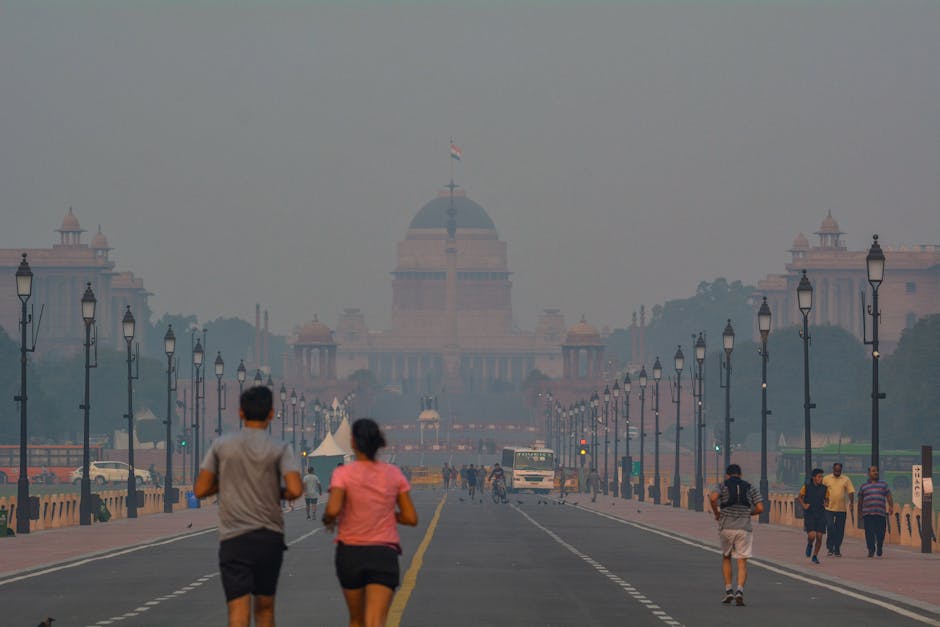
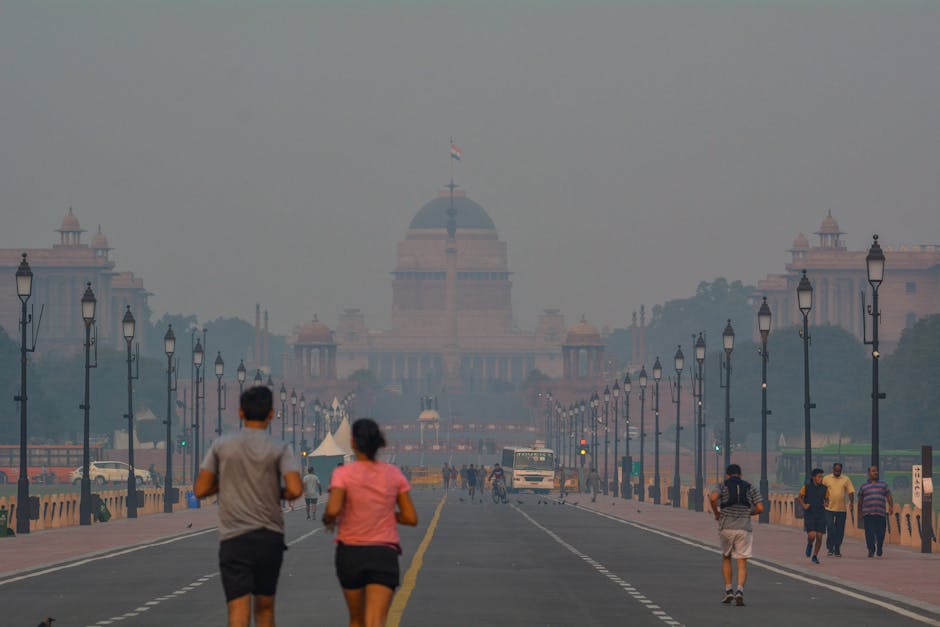
Parts of Delhi covered in smog, air quality remains poor; is capital on coldwave alert?

Parts of Delhi covered in smog, air quality remains poor; is capital on coldwave alert? - livemint.com
Delhi continues to grapple with extreme air air pollution, with massive elements of the capital enveloped in dense smog. This persistent environmental problem, marked by critically poor air high quality, now coincides with a possible chilly wave alert, elevating twin considerations for residents as winter progresses. The state of affairs, noticed all through current weeks, impacts each day life throughout the Nationwide Capital Area (NCR).

Background to Delhi’s Air High quality Disaster

Delhi’s wrestle with air air pollution is an annual phenomenon, notably acute through the post-monsoon and winter months, sometimes from October to February. This era sees a confluence of adversarial meteorological circumstances and elevated anthropogenic emissions. Key components contributing to the extreme air high quality embody vehicular emissions from a quickly increasing fleet, industrial pollution from surrounding areas, and development mud from quite a few ongoing tasks. Geographically, Delhi is landlocked, and through winter, cooler temperatures result in atmospheric inversion, trapping pollution near the bottom.
A big exterior contributor is stubble burning within the neighbouring states of Punjab and Haryana. Farmers usually burn crop residue after harvesting paddy to clear fields for the subsequent crop, releasing huge plumes of smoke that journey in direction of Delhi with prevailing northwesterly winds. The Graded Response Motion Plan (GRAP), an emergency motion plan applied by the Fee for Air High quality Administration (CAQM), outlines a set of escalating measures to be taken based mostly on the Air High quality Index (AQI) ranges. This framework was first notified in 2017 and has since been refined, categorizing air high quality from ‘Average’ to ‘Extreme Plus’ (Emergency) with corresponding restrictions. Historic information signifies that AQI ranges continuously cross into the ‘Very Poor’ and ‘Extreme’ classes throughout this time, prompting college closures and site visitors restrictions in earlier years.

Key Developments in Current Weeks

The air high quality in Delhi has remained constantly within the ‘Very Poor’ to ‘Extreme’ classes for a number of weeks in November and early December. Particular monitoring stations throughout the capital have reported alarmingly excessive Air High quality Index (AQI) readings. As an illustration, places reminiscent of Anand Vihar, Wazirpur, RK Puram, Dwarka, and Mundka have continuously recorded AQI values exceeding 400, inserting them firmly within the ‘Extreme’ zone. On a number of events, the general city-wide AQI has hovered across the 380-420 mark.
In response to those important ranges, the Fee for Air High quality Administration (CAQM) has repeatedly invoked and escalated measures beneath the Graded Response Motion Plan (GRAP). All through November, GRAP Stage III restrictions have been in impact, prohibiting non-essential development and demolition actions, banning the operation of BS-III petrol and BS-IV diesel gentle motor automobiles, and urging private and non-private places of work to implement work-from-home insurance policies. At occasions, when the AQI threatened to breach the 450 mark, GRAP Stage IV measures, together with a ban on entry of vans (besides important companies) and a possible enlargement of car restrictions, have been thought-about or briefly applied.

Stubble burning incidents, although exhibiting a declining development in comparison with earlier years, have nonetheless contributed to the air pollution load. Information from satellite tv for pc imagery indicated a number of thousand farm fires in Punjab and Haryana throughout peak burning durations, with their smoke plumes impacting Delhi’s air high quality relying on wind route and velocity. Meteorological circumstances have performed a vital function; low wind speeds and excessive humidity have exacerbated the state of affairs by decreasing the dispersion of pollution. The India Meteorological Division (IMD) has constantly monitored these circumstances, noting that calm winds usually result in an accumulation of particulate matter.

Concurrently, temperature developments have indicated a gradual dip, typical for this time of yr. Minimal temperatures in Delhi have been constantly falling, often dipping beneath 10 levels Celsius. The IMD has just lately issued advisories relating to a possible chilly wave. A chilly wave is said when the minimal temperature is 10 levels Celsius or much less and is 4.5 to six.4 levels Celsius beneath regular, or when the minimal temperature drops beneath 4 levels Celsius. Forecasts counsel that elements of Delhi and the broader NCR might expertise such circumstances within the coming days, intensifying the winter chill.

Affect on Residents and Infrastructure

The persistent poor air high quality and the approaching chilly wave pose important challenges to Delhi’s inhabitants and infrastructure. Essentially the most instant and widespread influence is on public well being. Extended publicity to ‘Extreme’ air high quality, characterised by excessive concentrations of effective particulate matter (PM2.5 and PM10), results in a variety of respiratory diseases. Hospitals have reported a rise in outpatient division (OPD) visits for circumstances reminiscent of bronchial asthma exacerbations, bronchitis, continual obstructive pulmonary illness (COPD), and basic respiratory infections. Weak populations, together with kids, the aged, and people with pre-existing cardiovascular or respiratory circumstances, are notably in danger. Signs like burning eyes, sore throat, and protracted cough have change into commonplace for a lot of residents.
Past well being, visibility has been severely affected. Dense smog usually reduces visibility to a couple hundred meters, impacting transportation. Flights at Indira Gandhi Worldwide Airport have confronted delays or diversions, and railway companies have skilled disruptions. Street site visitors turns into hazardous, growing the chance of accidents as a result of poor visibility. Economically, the GRAP restrictions on development and industrial actions result in momentary job losses and enterprise disruptions, impacting each day wage earners and small companies. The tourism sector additionally faces challenges as air pollution deters guests.

Day by day life for residents undergoes appreciable alteration. Colleges have continuously been ordered to shut or swap to on-line courses to guard kids from publicity. Outside actions are curtailed, and the usage of air purifiers and protecting masks has change into ubiquitous. The potential chilly wave provides one other layer of concern. Low temperatures improve the chance of hypothermia, particularly among the many homeless inhabitants. It additionally places a pressure on power infrastructure as demand for heating rises. The mixture of chilly temperatures and polluted air can additional compromise respiratory well being, making people extra vulnerable to infections and exacerbating current circumstances.

What Lies Forward: Forecasts and Future Actions

The instant future for Delhi’s air high quality hinges closely on meteorological components. Forecasts from the IMD and different climate businesses counsel that whereas momentary enhancements in air high quality would possibly happen with stronger winds, a big and sustained enchancment stays difficult with out extended durations of excessive wind velocity and precipitation. The buildup of pollution is predicted to proceed if calm wind circumstances persist. The CAQM will proceed to watch AQI ranges carefully, able to both escalate or de-escalate GRAP measures as required. Any sustained dip in AQI beneath the ‘Very Poor’ class might result in the revocation of some restrictions, providing reduction to varied sectors. Conversely, an extra deterioration might set off extra stringent actions beneath GRAP Stage IV.
Relating to the chilly wave, the IMD’s predictions point out that minimal temperatures are prone to drop additional within the coming days, notably within the early morning hours. This might result in the official declaration of a chilly wave in elements of Delhi and the encircling areas. Public advisories will seemingly emphasize precautions in opposition to the chilly, reminiscent of sporting a number of layers of heat clothes, staying indoors throughout peak chilly hours, and guaranteeing ample heating.

In the long run, governmental efforts proceed to deal with multifaceted methods to fight air pollution. These embody the promotion of electrical automobiles, stricter enforcement of emission norms, mechanization of highway sweeping, anti-smog weapons at development websites, and the event of inexperienced corridors. The Delhi authorities has additionally explored applied sciences like smog towers, although their efficacy stays a topic of debate. Inter-state coordination stays essential, notably for addressing stubble burning by way of incentives for farmers and selling various crop residue administration methods. Public consciousness campaigns can even proceed to coach residents on private precautions and sustainable practices. The continued problem calls for sustained dedication from all stakeholders to make sure a more healthy and safer setting for the capital’s inhabitants.
WhatsApp and Telegram Button Code
WhatsApp Group Join Now
Telegram Group Join Now
Instagram Group Join Now

Leave a Reply

Parts of Delhi covered in smog, air quality remains poor; is capital on coldwave alert?

Parts of Delhi covered in smog, air quality remains poor; is capital on coldwave alert? - livemint.com
Delhi and its surrounding Nationwide Capital Area (NCR) proceed to battle extreme air air pollution, with a thick blanket of smog persisting over town. Whereas residents endure poor air high quality, meteorological forecasts point out a possible chilly wave alert for the capital within the coming days, including one other layer of environmental problem. The twin menace underscores the advanced atmospheric situations presently affecting the megacity.

Background to Delhi’s Air Disaster

Delhi’s wrestle with debilitating air air pollution is an annual phenomenon, primarily manifesting between late October and February. This era marks a confluence of opposed components that lure pollution, turning the capital’s air poisonous. Traditionally, the post-monsoon transition sees a pointy decline in air high quality, typically exacerbated by regional practices and native emissions.

One of many major drivers is the observe of stubble burning within the agricultural states of Punjab, Haryana, and Uttar Pradesh. Farmers clear their fields by burning crop residue after harvesting paddy, releasing huge plumes of smoke containing particulate matter (PM2.5, PM10), carbon monoxide (CO), and different dangerous gases. These plumes journey in direction of Delhi with prevailing northwesterly winds. Whereas governmental efforts and technological interventions have been launched to curb this observe, its influence stays important, particularly throughout peak harvesting seasons.

Domestically, vehicular emissions from Delhi’s burgeoning fleet of personal and industrial autos contribute considerably to the air pollution load. The sheer quantity of vehicles, buses, and vehicles, lots of that are older fashions with much less stringent emission requirements, releases nitrogen oxides (NOx), sulfur dioxide (SO2), and nice particulate matter. Industrial emissions from surrounding areas like Ghaziabad, Noida, and Gurugram, alongside building mud from ongoing infrastructure tasks and biomass burning for heating or cooking in casual settlements, additional compound the issue.

Throughout winter, these pollution are trapped nearer to the bottom as a consequence of particular meteorological situations. Decrease temperatures result in calmer winds, decreasing the horizontal dispersion of pollution. Crucially, temperature inversion, the place a layer of heat air sits above cooler air, acts like a lid, stopping vertical mixing and trapping smog. This phenomenon creates a dense, hazy layer that may persist for days, typically merging with pure fog to type “smog.”

The air high quality is measured by the Air High quality Index (AQI), which categorizes air well being dangers. An AQI between 0-50 is ‘Good,’ 51-100 ‘Passable,’ 101-200 ‘Average,’ 201-300 ‘Poor,’ 301-400 ‘Very Poor,’ and 401-500 ‘Extreme.’ Something above 450 is commonly termed ‘Extreme Plus’ or ‘Emergency.’ Delhi often plunges into ‘Very Poor’ and ‘Extreme’ classes throughout winter, with particulate matter ranges typically exceeding protected limits by a number of instances.

In response to escalating air pollution ranges, the Fee for Air High quality Administration (CAQM) implements the Graded Response Motion Plan (GRAP). This emergency framework contains a set of escalating measures triggered by particular AQI thresholds. Over the previous few weeks, Delhi has seen the activation of GRAP phases, reflecting the severity and persistence of the disaster. These measures goal to mitigate air pollution sources however typically include important financial and social implications, impacting each day life and industrial actions throughout the area.

Current Developments: Smog Intensifies, Chilly Wave Approaches

The air high quality throughout Delhi and the NCR has remained alarmingly poor over the previous week, with a number of monitoring stations constantly reporting AQI ranges within the ‘Very Poor’ to ‘Extreme’ classes. As of early December, the general AQI for Delhi hovered round 380-400, indicating ‘Very Poor’ air, with quite a few hotspots breaching the ‘Extreme’ mark. This sustained poor air high quality has been a major concern for residents and authorities alike.

Particular areas bore the brunt of the air pollution. Monitoring stations in Anand Vihar, Wazirpur, Punjabi Bagh, Bawana, and Mundka often recorded AQI values exceeding 450, pushing them into the ‘Extreme’ and even ‘Extreme Plus’ classes. These areas, typically characterised by excessive visitors density, industrial exercise, or proximity to mud sources, function important indicators of town’s general air pollution burden. Visibility throughout town has been drastically lowered, typically dropping under 500 meters throughout morning hours, resulting in hazardous driving situations and intermittent flight delays at Indira Gandhi Worldwide Airport.

In response to the deteriorating air high quality, the CAQM just lately invoked Stage III of the Graded Response Motion Plan (GRAP) throughout your entire NCR. This activation introduced a number of stringent restrictions into impact. Non-essential building and demolition actions had been halted, impacting quite a few infrastructure tasks and actual property developments throughout the capital. Using BS-III petrol and BS-IV diesel mild motor autos was banned, aiming to cut back vehicular emissions from older, extra polluting autos. Moreover, personal workplaces had been suggested to function on work-from-home mode the place possible, to reduce visitors congestion and scale back commuter publicity to poisonous air. The ban on using coal and different unapproved fuels in industries and industrial institutions was additionally strictly enforced to chop down on industrial emissions.

Including to the environmental woes, the India Meteorological Division (IMD) has issued a chilly wave alert for Delhi and different elements of North India. Forecasts point out a major drop in minimal temperatures, probably reaching between 4 to six levels Celsius over the following three to 5 days. A chilly wave is formally declared when the minimal temperature is 10°C or much less and is 4.5°C to six.4°C under the conventional temperature for that area, or when the minimal temperature drops under 4°C. These impending chilly situations are anticipated to exacerbate the present smog scenario. Chilly air is denser and tends to settle nearer to the bottom, additional trapping pollution and stopping their dispersion, resulting in denser fog-smog situations. The mixture of excessive particulate matter and low temperatures creates a poisonous cocktail that may be notably dangerous to human well being.

Influence on Well being and Day by day Life

The persistent smog and impending chilly wave have profound and widespread impacts on the residents of Delhi and the NCR, affecting public well being, each day routines, and the general high quality of life. The twin environmental problem creates a fancy set of issues that demand instant consideration and long-term options.

Public Well being Disaster

Essentially the most instant and significant influence is on public well being. Publicity to such excessive ranges of particulate matter (PM2.5 and PM10) can result in a variety of acute and power well being points. Hospitals and clinics throughout Delhi have reported a major surge in sufferers complaining of respiratory issues. Circumstances of bronchitis, bronchial asthma exacerbations, and power obstructive pulmonary illness (COPD) have seen a marked improve. People with pre-existing respiratory situations discover their signs worsening dramatically, typically requiring hospitalization.
Past respiratory illnesses, the nice particulate matter can penetrate deep into the lungs and enter the bloodstream, posing dangers to cardiovascular well being. There may be an elevated incidence of coronary heart assaults, strokes, and different cardiac problems, notably among the many aged and people with pre-existing coronary heart situations. Eye irritation, burning sensations within the throat, and chronic coughs are widespread complaints among the many basic inhabitants, even amongst wholesome people. Kids, whose lungs are nonetheless creating, and the aged, with weaker immune techniques, are notably weak to the extreme well being impacts of extended publicity to poisonous air. Pregnant ladies additionally face heightened dangers, with research linking air air pollution to opposed start outcomes and developmental points in newborns.

Disruption to Day by day Life

Day by day life within the capital is considerably disrupted. The drastically lowered visibility, typically under 200 meters throughout peak morning hours, creates hazardous driving situations, resulting in slower visitors, elevated accident dangers, and basic commuter frustration. Public transport providers, together with buses and trains, typically expertise delays, impacting punctuality for thousands and thousands. Air journey can be affected, with quite a few flights experiencing delays or diversions as a consequence of poor visibility at Indira Gandhi Worldwide Airport, inflicting inconvenience for 1000’s of passengers.
Outside actions are severely curtailed. Parks, sports activities grounds, and open areas, often bustling with exercise, turn out to be abandoned as residents are suggested to remain indoors. This impacts bodily and psychological well-being, as alternatives for train and recreation diminish. The financial influence can be noteworthy; industries reliant on outside labor face challenges, building tasks are halted, and the tourism sector typically sees a dip throughout peak air pollution durations, affecting native companies and livelihoods.

Academic and Social Fallout

Academic establishments are sometimes among the many first to be affected by emergency air pollution measures. Colleges have periodically been suggested to shut or swap to on-line studying throughout days when the AQI breaches ‘Extreme’ ranges, disrupting educational schedules and inserting further burdens on dad and mom and educators. Social gatherings and outside occasions are often postponed or cancelled, impacting group life and cultural actions. The gloomy, hazy situations coupled with well being issues may also contribute to widespread stress, nervousness, and a basic sense of unease among the many populace, affecting psychological well-being.

What Lies Forward: Forecasts and Future Measures

The instant future for Delhi’s air high quality and temperature stays difficult, with each meteorological forecasts and potential coverage interventions shaping the outlook. The approaching days might be important in figuring out the trajectory of each the air pollution ranges and the severity of the chilly wave.

Air High quality Outlook

Any important enchancment in Delhi’s air high quality within the brief time period is closely depending on favorable meteorological situations. Forecasters are carefully awaiting a rise in wind pace, which helps to disperse pollution, or for rainfall, which might successfully wash particulate matter out of the environment. Nevertheless, present predictions counsel that calm winds and steady atmospheric situations would possibly persist for the following few days, indicating that the ‘Very Poor’ to ‘Extreme’ air high quality is prone to proceed. The interplay with the upcoming chilly wave additional complicates this, as colder temperatures are likely to lure pollution extra successfully, making a persistent layer of smog.

Chilly Wave Persistence and Interplay

The chilly wave alert issued by the IMD is anticipated to maintain minimal temperatures considerably low, probably for the following 4 to 5 days. This sustained chilly is not going to solely be a well being problem in itself, growing the chance of hypothermia and different cold-related sicknesses, however may also exacerbate the smog scenario. The denser, colder air will act as a lid, stopping the vertical dispersion of pollution. This interplay typically results in the formation of dense fog-smog (smog), which is a attribute function of Delhi’s winter, additional decreasing visibility and intensifying the sensation of a polluted atmosphere. Residents ought to put together for biting chilly coupled with hazy, poisonous air.

Potential Additional Authorities Actions

Ought to the AQI ranges deteriorate additional and constantly stay within the ‘Extreme Plus’ or ‘Emergency’ classes (above 450), the CAQM could also be compelled to invoke Stage IV of GRAP. This may entail even stricter measures, probably together with an entire ban on the entry of vehicles (excluding these carrying important items), a halt on all non-essential industrial actions, and even the implementation of the odd-even scheme for personal autos. Such measures, whereas essential for public well being, can have important financial repercussions and disrupt each day life even additional. Authorities are constantly monitoring the scenario and stay ready to escalate interventions as obligatory, prioritizing public well being above all.

Lengthy-term Methods and Citizen Response

Past instant emergency measures, long-term methods are essential for a sustainable resolution to Delhi’s perennial air air pollution disaster. These embody continued efforts to curb stubble burning by selling in-situ crop residue administration methods and establishing ex-situ utilization items for biomass. Accelerating the adoption of electrical autos (EVs), increasing and enhancing public transportation networks, and implementing stricter emission norms for industries stay priorities. Mud management measures, reminiscent of mechanized street sweeping, common water sprinkling, and the deployment of anti-smog weapons at building websites, are additionally ongoing and want constant implementation.
Residents are suggested to take proactive steps to guard themselves. Minimizing outside publicity, particularly throughout peak air pollution hours (early morning and late night), is really useful. Sporting N95 or equal masks when venturing out is essential for filtering nice particulate matter. Utilizing air purifiers indoors and making certain enough air flow can assist keep higher indoor air high quality. In the course of the chilly wave, dressing in layers, consuming heat fluids, and avoiding extended publicity to the chilly are important to forestall cold-related sicknesses. The collective efforts of presidency companies, industries, and particular person residents are paramount in mitigating this advanced environmental and public well being problem.

WhatsApp and Telegram Button Code
WhatsApp Group Join Now
Telegram Group Join Now
Instagram Group Join Now

Leave a Reply